
Attackers move more quickly than software development in the modern era. Businesses that put security first at every stage of development have a significant competitive edge. That’s why DevSecOps best practices are becoming essential for businesses that want secure, reliable, and scalable applications.
DevSecOps incorporates security into all stages of the development lifecycle rather than considering it as an afterthought. Businesses that use this approach are better equipped to manage vulnerabilities, lower risk, and confidently deploy software.
The best tactics that companies should use now are described in this handbook.
Security Bottlenecks in Modern Development
Conventional development pipelines prioritize features and speed. Security evaluations frequently occur at the end of the process, which presents a number of difficulties:
- Vulnerabilities discovered too late in production
- Delayed product releases
- Increased cost of fixing security issues
- Communication breakdowns between the security and development teams
Security teams become gatekeepers rather than partners when they work independently. This causes conflict and occasionally compels businesses to release software that still has flaws.
Why Ignoring Security Early Is Risky
Cyber threats are constantly evolving. Attackers actively take advantage of flaws in cloud infrastructure, web apps, and APIs.
Vulnerabilities like Cross-Site Request Forgery (CSRF) attacks, for instance, can enable attackers to deceive users into taking undesirable activities. Reverse engineering techniques can also reveal sensitive logic or private algorithms in apps.
These problems may go unnoticed if companies put off testing security until the very end. Costly violations, harm to one’s reputation, and legal repercussions are possible outcomes.
Integrating security from the start and incorporating it into regular development processes is the answer.
Secure Development Workflow Strategies
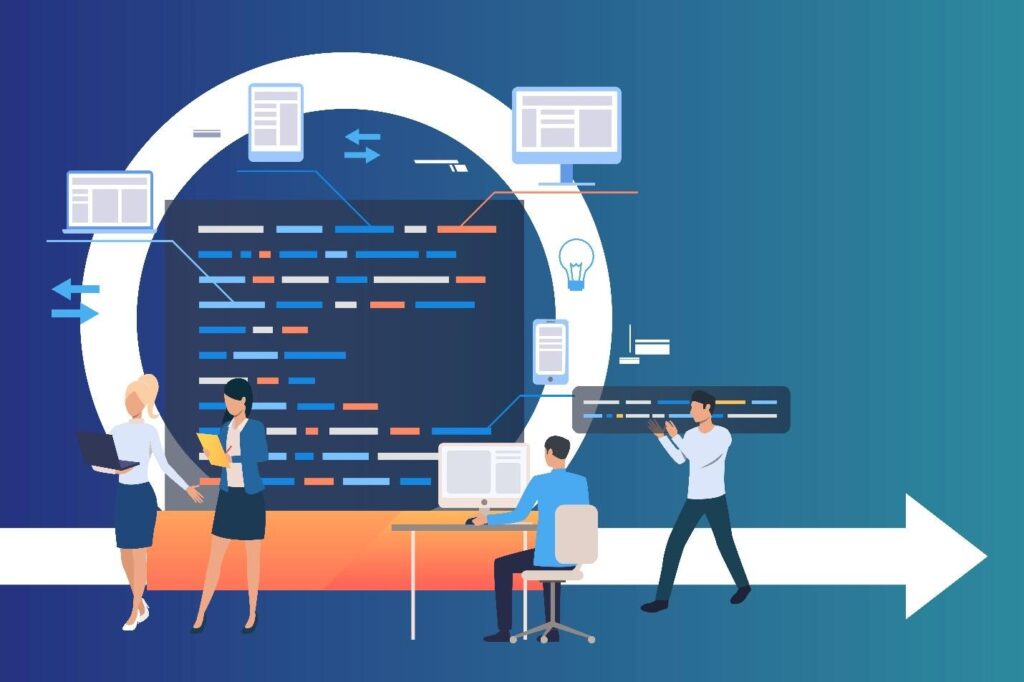
The five useful tactics listed below assist companies in integrating security into their development process without impeding creativity.
1. Shift Security Left in the Development Lifecycle
Moving security testing earlier in the development process is one of the most crucial DevSecOps security strategies.
Security checks should start during coding rather than waiting for deployment.
How to Put It into Practice
- Include tools for static code analysis in IDEs
- When making pull requests, use automatic scanning
- Teach developers how to write secure code
By using this method, vulnerabilities can be fixed later in the process with less expense and complexity.
2. Automate Security Testing
Scalable security requires automation.
Manual testing cannot keep up with modern CI/CD pipelines.
Key Tools to Integrate
- Testing for Static Application Security (SAST)
- Testing for Dynamic Application Security (DAST)
- Analysis of Software Composition (SCA)
Cloudflare’s devsecops policies, which prioritize automation and ongoing monitoring, are another source of inspiration for many firms.
Automated testing ensures vulnerabilities are detected immediately during builds.
3. Build a Security-First Culture
Applications cannot be secured by technology alone. One important factor is culture.
Instead of treating security as a distinct function, development teams must view it as a shared duty.
Useful Steps
- Teach secure coding to developers.
- Promote cooperation between the DevOps and security teams.
- Create champions for security inside development teams.
These actions foster a culture in which developers proactively recognize hazards.
4. Integrate Security into CI/CD Pipelines
Automated security checks should be part of pipelines for continuous integration and continuous delivery.
This guarantees that each build satisfies security requirements prior to deployment.
CI/CD Security Steps
- Code scanning during builds
- Dependency vulnerability checks
- Container image scanning
- Policy enforcement before deployment
This creates a seamless and secure development workflow.
5. Secure Your Software Dependencies
Open-source libraries play a major role in modern applications.
Nevertheless, vulnerabilities are frequently introduced by these dependencies.
The Best Methods:
- Check for known vulnerabilities in open-source libraries.
- Use dependency scanning tools
- Regularly update packages
Software Composition Analysis tools help identify outdated or insecure components before they become a risk.
6. Protect APIs and Microservices
In contemporary apps, APIs are one of the most focused elements.
In a DevSecOps pipeline, their security is crucial.
API Security Measures
- Implement authentication and authorization
- Enforce rate limiting
- Make use of API gateways with integrated security measures
These safeguards aid in preventing misuse and illegal access to apps. .
7. Implement Infrastructure as Code (IaC) Security
Teams may programmatically manage cloud environments with Infrastructure as Code. Misconfigurations, however, can lead to vulnerabilities.
IaC Security Techniques
- Scan infrastructure templates before deployment
- Enforce policy checks
- Use secure configuration baselines
Security testing should be part of infrastructure automation.
8. Monitor and Log Security Events Continuously
After deployment, security doesn’t end.
Early detection of suspicious activities is facilitated by ongoing surveillance.
- Keeping an eye on best practices
- Centralized recording
- Systems for Security Information and Event Management (SIEM)
- Automated anomaly alerts
Teams can react swiftly to threats thanks to this visibility.
9. Protect Applications Against Reverse Engineering
Reverse engineering can expose intellectual property or sensitive application logic.
Security solutions from PreEmptive help protect applications through techniques such as:
- Obfuscation of codes
- Self-defense of runtime applications
- Anti-tampering systems
These fixes make it more difficult for hackers to examine or alter software.
10. Work with Experienced DevSecOps Partners
It takes experience to implement security in complicated development environments.
Many businesses collaborate with experts like Tambena Consulting to hasten the adoption of DevSecOps.
How Tambena Consulting Helps Businesses
Tambena Consulting offers comprehensive DevSecOps services that supports organizations by:
- Creating safe DevOps architectures
- Putting in place automated security pipelines
- Including tools for vulnerability scanning
- Creating frameworks for governance and compliance
- Training development teams in secure practices
They assist businesses in implementing useful devsecops strategies that enhance security without impeding innovation by fusing industry experience with cutting-edge automation solutions.
How to Start Implementing These Strategies
Businesses frequently don’t know where to start. Incremental adoption is the best strategy.
Begin with these three fundamental steps:
- Add automatic security scanning to pipelines for continuous integration.
- Educate developers about safe coding techniques
- Monitor dependencies and infrastructure configurations
Teams can increase their security capabilities throughout the whole lifecycle once these fundamentals are in place.
In the end, adhering to devsecops best practices guarantees that companies produce secure software while retaining the speed and flexibility necessary for contemporary development.
FAQs
What is DevSecOps, and what distinguishes it from DevOps?
An advancement of DevOps, DevSecOps incorporates security into all phases of the software development lifecycle.
DevSecOps includes security as a shared responsibility, whereas DevOps emphasizes cooperation between development and operations teams. Security testing is used continually during development, testing, and deployment rather than just prior to release.
What makes DevSecOps best practices crucial?
Organizations benefit from these practices:
- Determine weaknesses sooner
- Cut down on security threats
- Continue to adhere to regulations
- Boost the dependability of software
- Safeguard client information
Businesses may avoid costly updates and lower the risk of breaches by integrating security from the start.
Which security tools are utilized in DevSecOps?
Typical DevSecOps tools consist of:
- Tools for Static Application Security Testing (SAST)
- Tools for Dynamic Application Security Testing (DAST)
- Platforms for scanning containers
- Tools for Software Composition Analysis
- Tools for detecting secrets
- Scanners for infrastructure configuration
Vulnerability detection in development workflows is automated by these tools.
What role do reverse engineering and CSRF play in DevSecOps?
Attackers may be able to carry out illegal operations on behalf of users because to security risks like Cross-Site Request Forgery (CSRF). In order to find such vulnerabilities during development, DevSecOps pipelines incorporate automated testing.
Threats from reverse engineering target built programs to reveal sensitive information or logic. Attackers are prevented from examining the internal workings of a program by protective measures like code obfuscation and runtime security precautions.
How may PreEmptive aid in the adoption of DevSecOps?
PreEmptive’s solutions aid in the security of applications both during and after development.
Their technologies offer:
- Obfuscation of codes to safeguard intellectual property
- Hardening applications against reverse engineering
- Protection against manipulation during runtime
- Integration with pipelines for CI/CD
- In a DevSecOps setting, these features improve application security.
Organizations may create secure development pipelines that safeguard users and software while fostering quick innovation by implementing these tactics and collaborating with seasoned suppliers like Tambena Consulting.otect both software and users while maintaining rapid innovation.