Developing for Apple users is more important than ever. Understanding the iOS app development process will help you create digital goods that delight consumers and promote company success, regardless of your role as a corporate executive, entrepreneur, or startup founder.
This guide walks you through every stage of the process, planning, designing, creating, testing, publishing, and expanding your iOS app, using a straightforward methodology backed by industry insights.
Why Learning iOS App Development Matters Today
Apple users make up a large portion of today’s mobile market, and they tend to spend more on apps, subscriptions, and digital services. Because of this, creating iOS apps is among the most lucrative digital investments you can make. The potential for effect is huge, ranging from developing a basic utility app to developing a whole enterprise platform.
However, a lot of novice developers and entrepreneurs find it difficult to respond to the most frequent query: “Where do I even start?”
So, let’s uncover every stage of developing an iOS application. Plus, we’ll cover how experts like Tambena Consulting can help accelerate your success.
Step-by-Step Guide to Building Your iOS Application
Let’s see the process of iOS mobile app development in detail…
Understanding the iOS Ecosystem and the Basics of Developing Mobile Applications
Before you write a single line of code, familiarize yourself with the Apple ecosystem. This will ensure smooth development and an application that meets Apple’s user experience standards.
Key Components of Apple’s App Environment
- Xcode: Apple’s official development environment
- Swift: The modern language recommended by Apple
- SwiftUI: A UI framework that simplifies interface building
- Cocoa Touch Frameworks: Make system services accessible
- App Store Guidelines: Strict guidelines for performance, privacy, and user interface
Analyzing Market and Competitor Gaps
By conducting a market analysis, you can make sure that the app you develop offers customers a customized experience.
How to Make Your Product Stand Out with Competitor Gap Analysis
A detailed competitor analysis helps identify:
- Missing features in existing apps
- Weak UI or poor accessibility
- Opportunities for better performance
- Disparities in subscription app prices
To identify actual consumer pain concerns, look into resources like App Store rankings, Sensor Tower, and user reviews on Reddit and Quora.
Organizing the Features and User Flow of Your App
Crafting an Effective Feature Roadmap
Define your app’s core functionality by listing:
- Key characteristics (essential)
- Secondary characteristics (desirable)
- Future expansion features
Programs like Miro, Figma, and Lucidchart can be used to map wireframes, UI flows, and user journeys.
Creating the User Experience for Your App
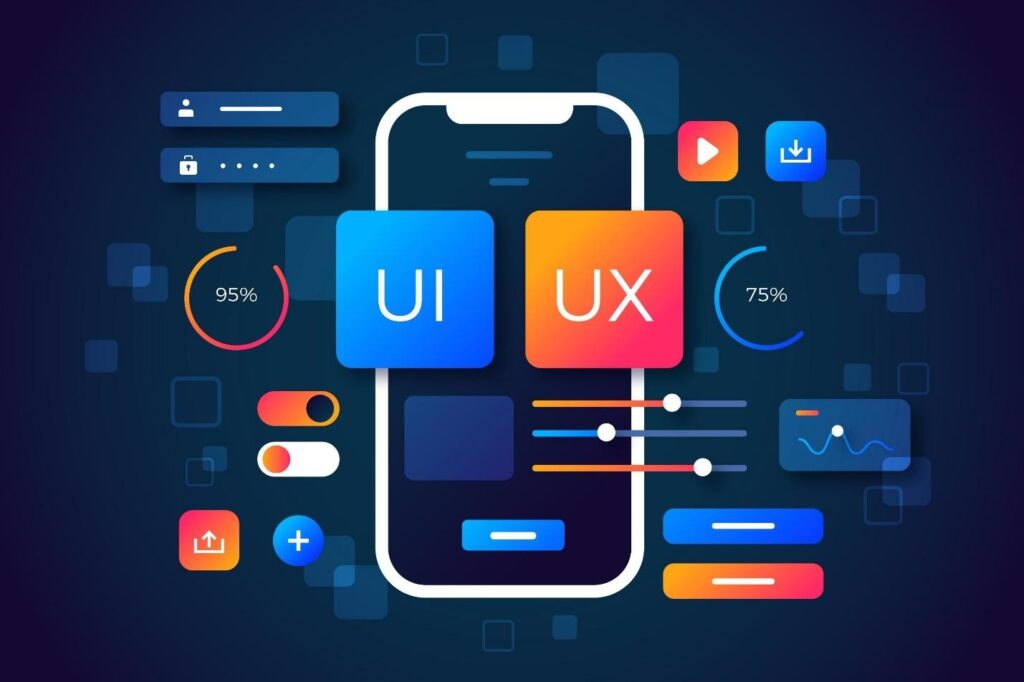
The success of any iOS app depends on UI/UX. Because of Apple’s high design requirements, following their Human Interface Guidelines is imperative.
Human-Centered UI/UX Principles
- Keep things straightforward.
- Use intuitive navigation
- Apply consistent spacing and typography
- Prioritize accessibility
- Offer quick onboarding
Developing the iOS Application (Synonym LSI)
Now comes the actual building process.
Choosing Between Native and Cross-Platform Development
Native (Swift)
- Fast
- Best performance
- Full access to Apple frameworks
Cross-Platform (Flutter, React Native)
- Faster deployment
- Shared codebase
- Cost-effective
Integrating APIs and Backend Systems
Your backend may use:
- Firebase
- AWS
- Supabase
- Custom Node.js / Python backend
Testing Your iOS App for Quality Assurance
Types of Testing You Should Conduct
- Functional testing
- UI testing
- Beta testing via TestFlight
- Performance and load tests
- Security assessments
Never skip QA. Apple reviewers will find issues before you do.
Deploying to the Apple App Store
Preparing for App Store Submission
- Create a developer account
- Prepare app screenshots
- Write ASO-optimized descriptions
- Comply with Apple’s guidelines
- Submit via Xcode
A review period of 24 to 72 hours (often longer) should be anticipated.
Updating, Scaling, and Maintaining Your App
The Significance of Constant Updates
- Fix bugs
- Improve compatibility with new iOS versions
- Add features users request
- Boost output
Satisfied users translate into higher ratings and more downloads. .
How Tambena Consulting Helps with Your iOS App Development Project
Tambena Consulting offers iOS app development services that can lower risk, speed up development, and guarantee a polished final result. They provide:
Product Roadmapping and Strategic Planning
Obtain expert advice on feature sets, technology selection, and market research.
Full-Stack iOS Development Services
Swift code, UI/UX design, backend integrations, QA, and App Store submission are all handled by their team.
A Business-Driven Method
Tambena makes sure your app expands with your business by concentrating on ROI, scalability, and long-term maintenance.
Complete Assistance
Tambena supports you at every stage of the product lifecycle, from conceptualization to launch to growing.
Tambena Consulting provides the technical know-how and business acumen required for success, whether you’re developing a new product or enhancing an old one.
FAQs
How can one create an iOS application?
To make an iOS application, you need a Mac, Xcode, and the Swift programming language. The first steps are to plan your app concept, design user flows, construct UI elements with SwiftUI or UIKit, build core functionality, link APIs, test with TestFlight, and finally publish the app to the App Store.
Is it feasible to develop iOS applications on Windows?
Yes, but not in the original language. It is necessary to have cloud-based Mac services, virtual machines, or cross-platform technologies like Flutter or React Native. Nevertheless, in order to compile the final program, macOS is still required.
How to develop iOS apps on Windows?
You can develop iOS apps on Windows using one of these methods:
- A macOS cloud service like MacStadium
- A macOS virtual machine
Cross-platform frameworks, then compile on a Mac
You still need macOS at some point for signing and submission.